
Community Spotlight:
Charles Gardner
Community Spotlight:
Charles Gardner
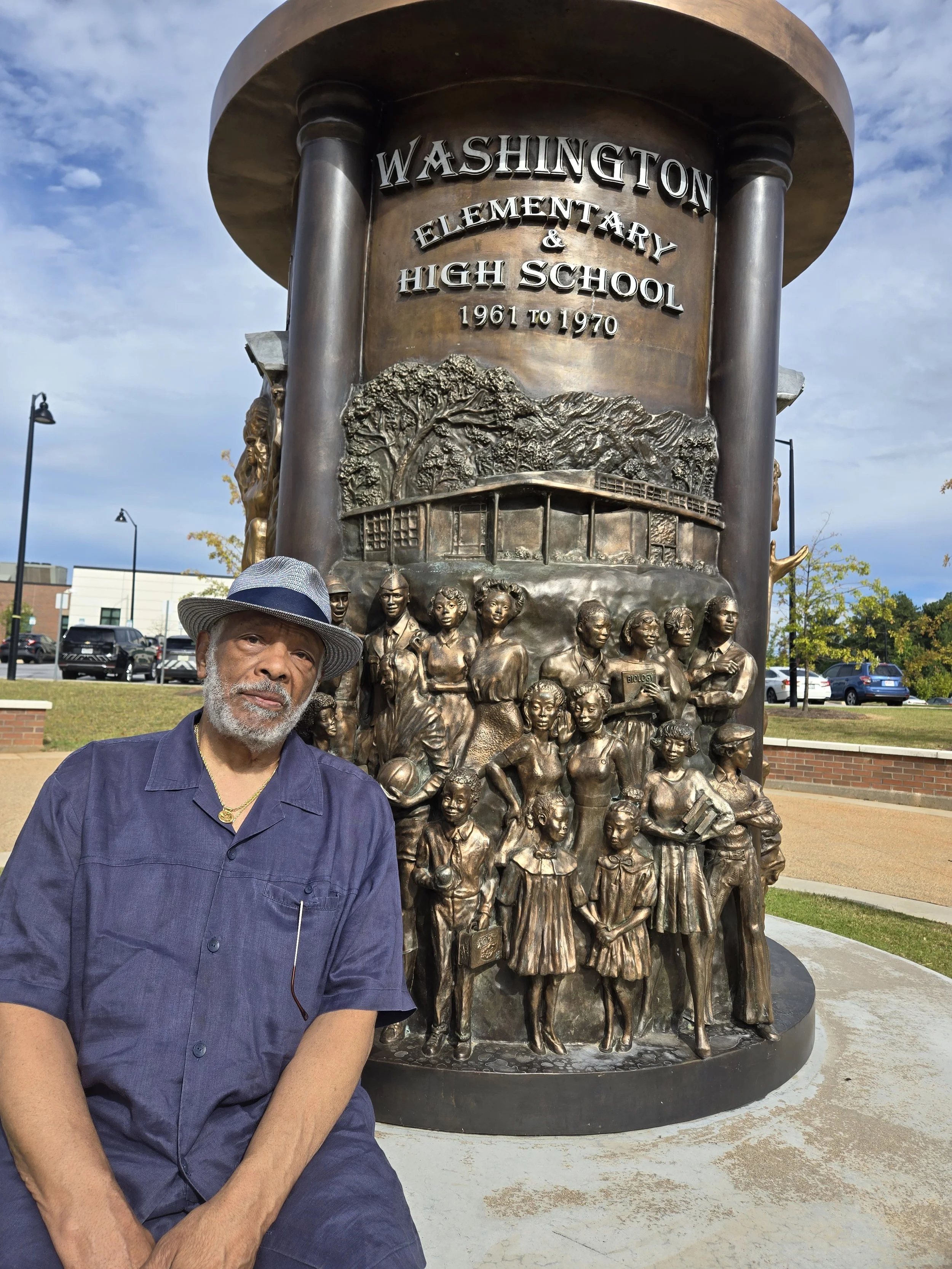
At 80 years young, Charles Gardner swims four or five times a week at the YMCA.
That steady practice may not be what makes him a local hero to many, especially in Greenville's historically African-American neighborhoods, but it does have a compelling origin story – like a number of his laudable life achievements.
No, swimming laps would not have seemed possible to Gardner back in 1967, when on the first day of U.S. Navy boot camp, Gardner was perched above a 12-foot-deep indoor pool trying to figure a way to survive the plunge – and fool his Navy superiors who were testing the would-be sailors on their swimming ability. At 19 years old, Charles Gardner did not know how to swim, a prerequisite for service in the sea-based branch of the U.S. military he was determined to join.
His scheme to roll on his side once he jumped in didn't quite work. Nor did it fool anyone. Struggling in the water, he heard yells to “open your eyes”, and when he did, a long rod had been extended to pull him to safety.
Yet Gardner looks back at that “failure” as a blessing in disguise: While other boot campers had to peel potatoes, clean latrines, and trudge through all the other grunt work meant to separate the serious from the undisciplined, he spent boot camp in a swimming pool learning how to swim.
That turn-in-luck at the outset of his Navy service put him on a path toward realizing that his head-strong resolve, when combined with acquiring skills and learning to work with all kinds of people -- along with his firm belief in the grace of God – could forge the framework of focus he needed for whatever life had to offer. And for the plentiful opportunities that Gardner would soon offer others in the Greenville area – in community development and engagement, improving access to library services, affordable housing, and more.
Seeking focus
It was focus that Gardner sought when he left Voorhees University in Denmark, SC, after 5 semesters, feeling aimless, to join the Navy, hoping it would equip him with the education and discipline to figure out a career path. Intelligence was never the issue, but he lacked specific goals, he said.
With exceptionally high scores in every assessment test by the Navy, he advanced quickly through various specialty training programs in the Navy's elite Nuclear Submarine Force. Over four years in the service, he mastered the rigorous discipline to operate and maintain the Navy's complex nuclear submarine machinery.
In 1971, he left the Navy and headed back to his native Greenville, where his high school sweetheart, Carol, was now his wife. He was promptly offered a well-paying position at the new, not yet-online, Oconee Nuclear Station, an hour west of Greenville. But instead, his intuition told him to take a lower-paying job as an audio-visual technician with the Greenville Library System, a decision that would alter the trajectory of his life – and also the lives of many Greenville area children and families he would impact over the next several decades.
Gardner's professional and volunteer achievements shared similar approaches: He viewed needs as opportunities, when others didn't. He saw voids in access or services, especially among the poor and among fellow African Americans, and then he visualized solutions. As a compassionate and creative problem solver, he figured out how to bring those solutions to fruition.
Gardner quietly and resolutely understood that progress in justice required regular prodding and tending. And collaborating with all the folks he knew growing up and contacts he continued to cultivate. Relationships mattered. He learned to effectively challenge folks, with growing diplomacy, to do the right thing.
Areas of impact
Among his biggest impacts have been to:
* Encourage and energize Black children and families to use and enjoy the newly integrated public library system services in the 1970s
* Rehabilitate neglected neighborhoods with new affordable housing
* And most recently, spearhead an effort to recognize Washington School, his high school alma mater, with a monument in a predominantly Black community and decided to locate Greenville Transit Authority's new bus operations facility on the old school site with little neighborhood input.
Let's look at those areas of impact a little more closely.
Public library engagement:
In the early '70s, after taking his first post-military job with the downtown Greenville library as a audio-visual worker, Gardner quickly observed that very few African Americans were walking through the door, although the previously all-Black library on East McAbee Avenue had been well used. He also noted that three broken-down bookmobiles were not in use at the library. So he asked if he could take the parts from two of the inactive vehicles to repair the other idle one. And to use the stacks of “gift books” – donated from the community and stored in the library basement – to stock the bookmobile shelves. After getting the green light for that effort, he repainted the rehabilitated bookmobile in bright red and yellow, attached speakers to the roof, and rode into the under-served Black neighborhoods blasting James Brown, Kool & the Gang, or Al Green to attract the attention of the kids. He invited them and their parents onto the bus to check out books – and also to events at the library such as evening story hours in their PJs and Saturday morning movies.
He played with the kids, offered incentives and new programs that would persuade them to come to use the library, or encourage them to learn to use the card catalog to earn a prize.
The first week that the new wave of young African American middle schoolers rolled into the library, many of whom had never stepped foot in the space before, did not go so quietly. “They were running wild, up and down the stairs” recalled Gardner, disturbing the library staff and other patrons. At the next staff meeting, when Gardner was called out for the rowdy behavior of his newly recruited library visitors, Gardner stood up and looked around the room. “Every single one of you has a Master's Degree,” he said to his fellow staff members. “Don't you think we can figure out how to teach these kids proper library etiquette?”
With the staff stationed around the library as monitors, offering low-voiced reminders, the kids did, over time, quiet down and become more regular library visitors and readers. With the help of state library grants, Gardner, who was now the library system's outreach director, also extended his engaging library programs to community centers and to children at Marshall Pickens and Shriner's hospitals.
City department directorships/Affordable housing: His success at engaging communities did not go unnoticed. It helped that he was persistent, and particularly good at remembering people and fostering relationships. While working at the library, Gardner had been invited to lunch a couple of times by Mayor Max Heller, a man he deeply admired, who periodically recognized local workers who showed impressive initiative and positive outcomes, like Gardner.
In 1972, when there was a lot of unrest in the City of Greenville, Gardner decided to pursue the City's newly vacant Director of Community Relations position. He reached out to Heller, who directed him to the City Manager John Dullea, who did the hiring. In an unorthodox approach to the normal job-interview process, Gardner sat for hours outside Dullea's closed office door one day to make sure he could meet him. It turned into a four-hour, post five-o clock unscheduled conversation about how to improve community relations. It didn't hurt to mention that Heller had “sent him there”. Gardner got the job.
He went to work on the striking sanitation workers, and the kids who were throwing bricks at cops. He established and directed channels of communication between the local citizens and their city government. Gardner also worked with the NAACP, which wanted more Black representation on City Council, and the planning commission to find a compromise plan to have both individual council districts and at-large seats (representing the entire city). That council structure of four single-member district seats, plus two council seats and the mayor elected at large still exists today.
He oversaw volunteer programs and dug in deep on public relations work.
A decade later, his success at programming and talent for creating partnerships among unlikely groups earned him a new position with the City in 1984: Administrator of Community Development and Relations. Affordable housing became a focus, securing and administering federal grants for home ownership in disadvantaged neighborhoods, such as Nicholtown and in west Greenville. He was especially happy to oversee the Viola Street neighborhood overhaul, since he grew up there.
Even after he retired from the City of Greenville in 1999 as Community Services Director, Gardner served on the South Carolina Housing Finance Development Authority Board of Directors from 2012 through 2025. Appropriate housing for all has been a hub of his advocacy work for decades.
“If a child does not have a place to come home to, a shower, heat in the winter, food to eat, if their clothes smell like kerosene on the bus, how can that child be expected to compete in school?,” said Gardner. “Or feel like he can invite his school friends over to his house? Environment has a whole lot of effect on a person's outlook and the decisions they make in life.”
Tribute monument to Washington School: An alumnus of the all-Black Sterling School for his middle grade years and then Washington Elementary and High School for senior high, Gardner was drawn more recently to the conflict in the New Washington Heights neighborhood about the placement of the new Greenville Transit Authority bus operations and maintenance facility on the site of the school that served Black students from 1961 until 1970.
Once the school building was razed, residents of New Washington Heights (also called the Happy Hearts community) were led to believe that they would have input into what was going on the old school property. But during Covid, when folks couldn't meet to express their opposition, Greenville County transferred the property to the Greenville Transit Authority for its new facility, as needed to utilize federal grant monies for the project. Many of the residents were angered by what felt like a “dirty deal done in the middle of the night,” explained Gardner. They felt taken advantage of, anticipating the noise, bright lights, and pollution that usually come with such a facility.
More than anything, the predominantly Black community felt the authorities disregarded their voices about a school site many regarded as almost sacred to its proud alumni.
To smooth things over, GTA and the City of Greenville were now asking the neighborhood for recommendations for what they wanted to see on the six acres of the site abutting the GTA operations. A few of the residents remained so upset they refused to have anything to do with discussing upgrades the City was willing to pay for.
Enter Gardner. With his delicate diplomacy, he offered common sense. Yes, folks had a right to be angry, but the grant money was not going to be returned. Here's your chance, he reasoned, to get something for the Happy Hearts Community; don't let this opportunity be lost.
As a result of many more discussions and then agreement, GTA named a room inside their building for the former school's principal, J. Wilbur Walker, that can be used for alumni events. And now, just outside the GTA operation building, is New Washington Heights Park. It has plenty of green space, a new playground, and a new pavilion with picnic tables and restrooms. At the center of the space rises the crowning glory: a gorgeous, columnar monument in bronze to Washington Elementary & High School. The sculpture, created by accomplished West Virginia sculptor Frederick Hightower Sr., showcases in relief the academic, athletic, and artistic pursuits of the students.
There are also bronze plagues around the park's monument that list the grant donors and individual contributors to the sizable fundraising campaign required to acquire the impressive monument. It was dedicated this past May.
Charles Gardner, not surprisingly, was chair of the monument effort.
Finding a positive spin
Without ever deciding on a vocation, Gardner found numerous ways throughout his adult life – – from the risky jump in the Naval swimming pool to negotiating workable compromises with opposing factions – to take lemons and make lemonade. He's received many awards along the way, but he often deflects the credit for his successes to a greater power.
“I've been blessed,” he said, “God has always put me in a position to help people, to influence others to use their resources to improve lives.”
Indeed.
[LL]
Community Spotlight:
Kendra Williams


A Q&A with Community Leader, Kendra Williams
Where were you born? Where did you grow up? How long have you been a Greenville resident?
I was born in Greenwood, SC, grew up in New York, and I moved to Greenville, SC in Feb 2001 to be close to my family.
What inspired you to become a leader in this community, and what personal experiences shaped your journey?
I have been willing to step in to give a helping hand and fill in the gap for a need wherever I went. I never intended to become “a leader in the community.” I do see my calling as a connector in the community.
What core values or beliefs guide your leadership, and how do they influence the decisions you make?
I believe in helping those who fall into the gaps, and I believe there is a need of people to understand the perspectives of Black people in the community.
What is the core mission of your work, and how do you see it making a lasting impact in the community?
The core mission of my work is to have the local community learn the contributions of Black people in the Greenville community.
Teaching is often a highly rewarding endeavor. What is the most meaningful part of your work? How does teaching people about Greenville's history make you feel?
I believe it is Divine Destiny that I am doing this tour sharing history because I have repeatedly and categorically rejected being a teacher for decades; and yet here I am. Now I feel the weight and the importance of the information I share before each tour or presentation and yet it is absolutely invigorating for me to share this information with others knowing I am empowering those who do not know their history and enlightening those who didn’t know we had any here.
What is the most surprising historic fact that you've learned while researching the Black history (or general history) of Greenville?
One of the most inspiring representations of our excellence is the Working Man's Benevolent Temple Professional Building built to provide opportunity and resources for the Black community. This was built with quality, beauty, and elegance in its design and craftsmanship.
Which community institutions have you collaborated with to expand the reach of your work?
I collaborated with the Urban League of the Upstate (ULUS) on their education component resulting in a civil rights tour map in 2024.
Are there any upcoming new opportunities for your work that you're excited about?
I am excited about expanding options for the tours to weekdays and mobile options as well as bus trips to historical sites across SC and outside the state.
How can community members get involved or support the work you’re doing?
Everyone can get involved by taking one of the Saturday morning tours, scheduling a private tour or presentation for your group, by sharing that this tour exists.
If you could meet/have a conversation with any historical figure, who would it be? and why?
Eve. I want to know what it was like to live uninhibited in your own environment before racism and sexism took over the world.
Are you an introvert or an extrovert?
I am an introverted extrovert.
What person has made the biggest impact on your life?
My mother and my grandmother.
If you could travel anywhere in the world, where would you go?
I would travel to many countries in Africa to see their natural wonders and learn history at the origin of the world’s people.
What's your favorite way to unwind after a busy day?
Laughing with my daughter.
What is your favorite food or guilty pleasure snack?
Popcorn is my favorite snack.
Favorite childhood memory?
I remember feeling so happy about being 8 years old at my birthday party and then being a volunteer in the elementary school library so I could read the new books first.
Favorite season of the year and why?
My favorite time of the year is Late Spring before official Summer after the pollen is washed away. There is nothing sweeter than feeling the warm Spring breeze as everything is blooming.
What inspires you?
Honesty, sincerity, and purity of heart.
What are you most thankful for?
I am most thankful for both Jesus for his sacrifice for my life and my mother for her unconditional love and the opportunities she made for me to be who I am today.
Favorite Greenville restaurant?
Stax Omega for breakfast.
Favorite Greenville greenspace/park to visit?
Liberty Bridge in Falls Park.
In your opinion, what makes Greenville a unique/special city?
The ability to play, eat, sleep, and walk down a beautiful Main Street to each of these.
What are the most significant changes you've witnessed in the community/city over the past few years?
The most significant changes I have seen include Downtown Greenville developing from an area of Greenville that was just a quaint and quiet downtown space into a bustling city environment with small town charm. I have also seen previously neglected, red-lined neighborhoods become the most desirable locations to live.
[KS]